
Why incident reporting matters
The report you write today is the defense you have next year.
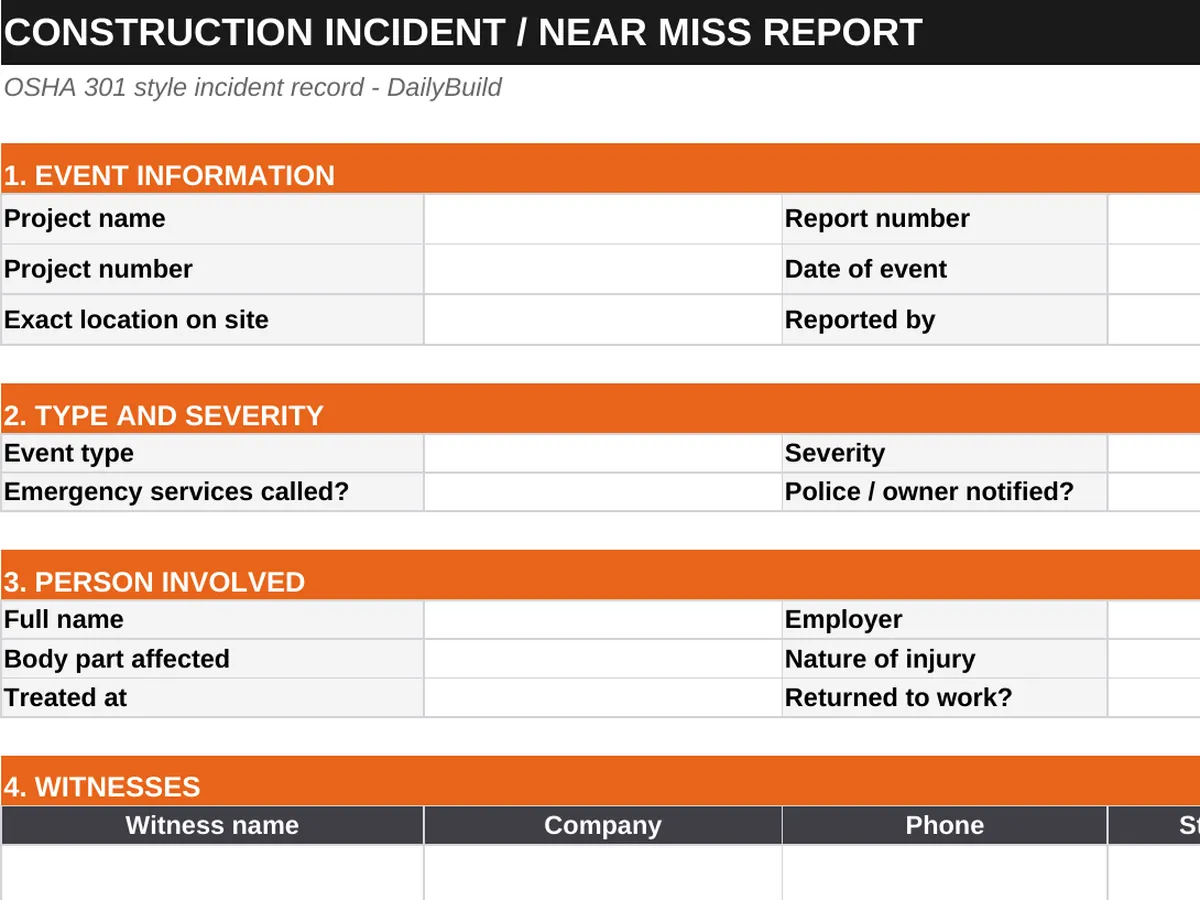
An incident report is the contemporaneous record of what happened, who was involved, and what was done about it. Written the same day, it protects the worker, the company, and the project. Written a week later from memory, it protects nobody.
Near misses are free lessons
A near miss is an incident that happened to miss. The same conditions, the same task, the same shortcut - only the outcome differed. Crews that report near misses fix hazards before the injury version arrives, which is why serious programs measure near miss reporting as a leading indicator.
Get to a cause you can fix
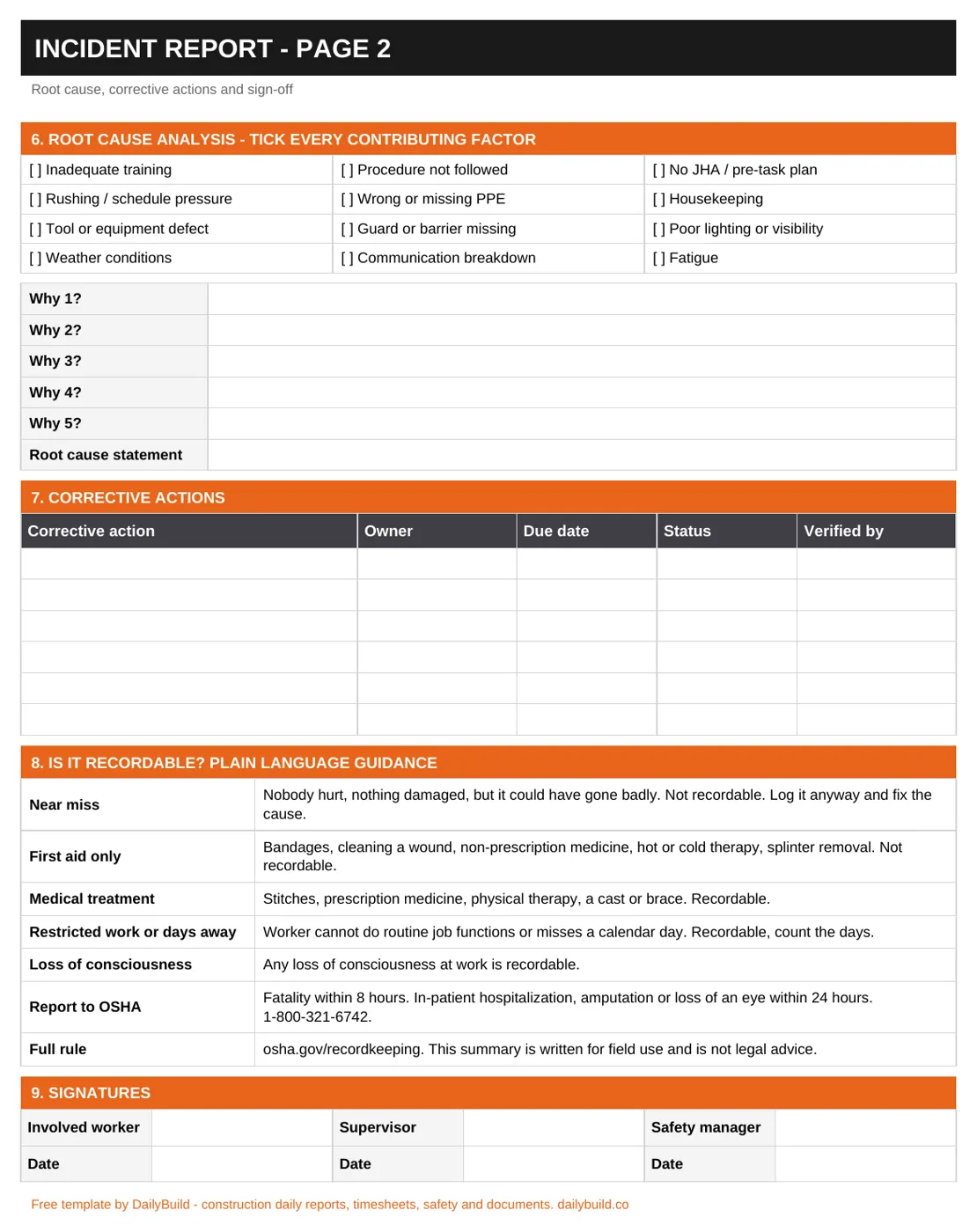
"Worker was careless" is not a root cause and cannot be corrected. The five whys section pushes the investigation past behavior to the missing barrier: no pre-task plan, wrong tool available, rushed schedule, or a procedure nobody was trained on.
Know your reporting clock
OSHA requires a fatality to be reported within 8 hours and an in-patient hospitalization, amputation, or loss of an eye within 24 hours. Recordable cases must be entered on the OSHA 300 Log within 7 calendar days of learning about them. The form prompts for both.
Close the actions or nothing changed
Every corrective action needs a name and a date. An investigation that ends with a filed form and no completed action leaves the hazard exactly where it was found.