

Why an SSSP matters
A generic safety manual is not a site-specific plan.
A site-specific safety plan takes your company safety program and applies it to one project: this scope, this crew, this address, these hazards. Most general contractors require one before a sub mobilizes, and a plan that could belong to any job is the fastest way to get it rejected.
Name the competent persons
OSHA requires a competent person for excavation, fall protection systems, and scaffolding among others - someone capable of identifying hazards and authorized to correct them. The plan names them, and a name is what reviewers look for first.
Match hazards to your actual scope
Work through the high-risk activity matrix honestly. If the job includes hot work, excavation, or confined space entry, the plan should say so and reference the permits that govern them. If it does not, mark it not applicable rather than leaving generic text in place.
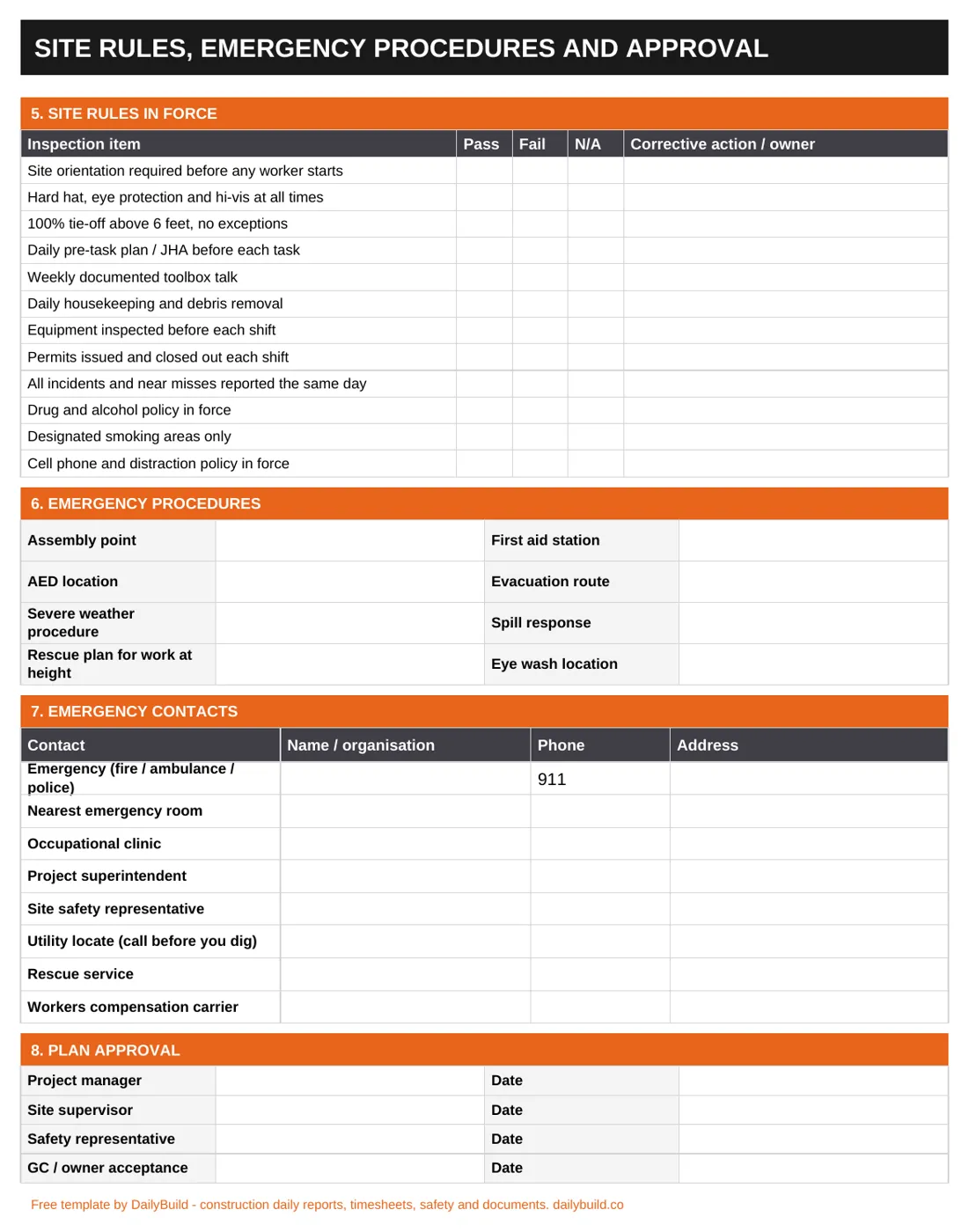
Emergency response is address specific
The nearest emergency room, the assembly point, the AED location, and the rescue plan for work at height all change with the site. This is the section reviewers check to see whether the plan was actually written for their project.
Revise it when the job changes
Phases change hazards. Update the revision number and date whenever the scope, crew size, or work method changes materially, and re-brief the crew on what moved.