
Why permits exist
Permit work kills people who skipped one step.
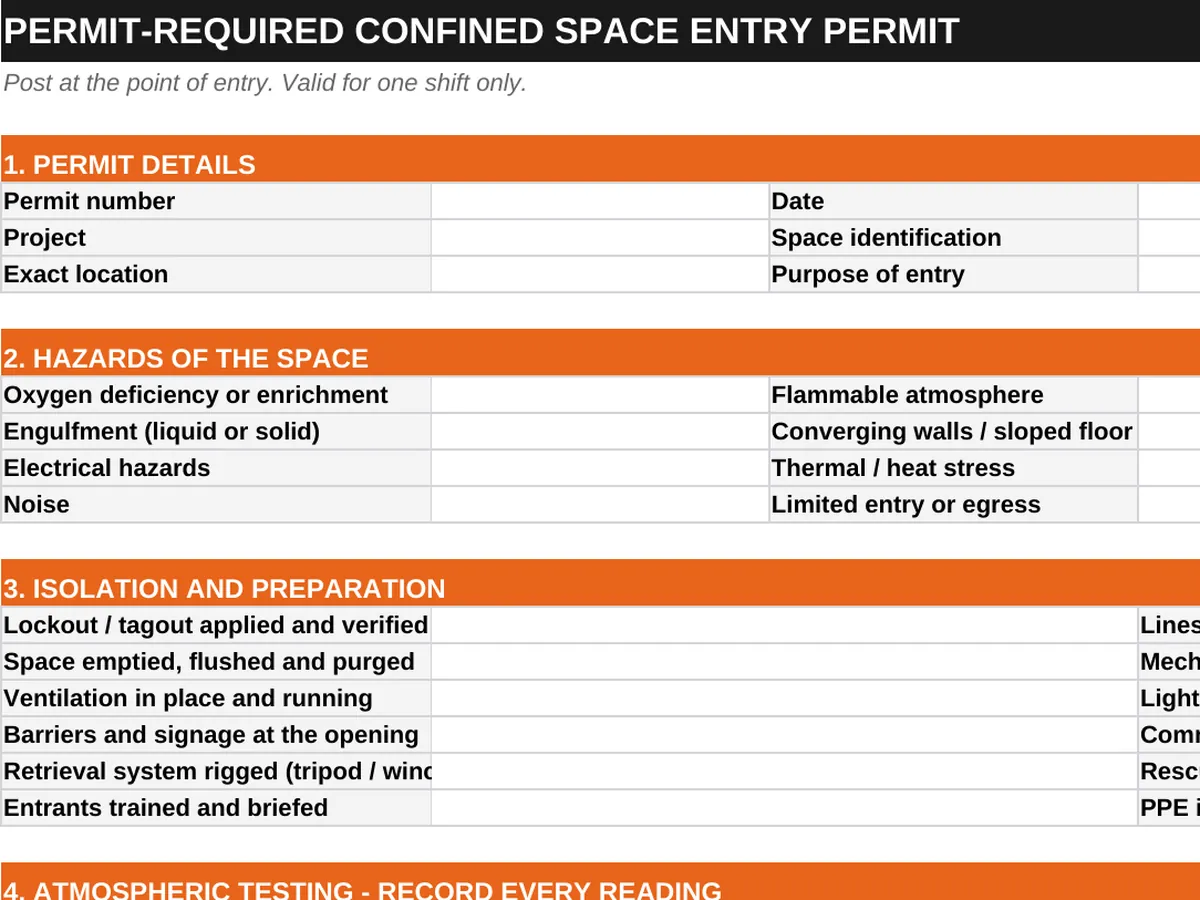
A permit-required confined space is a space large enough to enter, with limited means of entry or exit, not designed for continuous occupancy, and containing a hazardous atmosphere, engulfment risk, converging walls, or any other recognized serious hazard. Tanks, vaults, manholes, pits, and sewers usually qualify.
Test before entry, then keep testing
Test in order: oxygen first, then flammables, then toxics. Do not enter if any reading is outside the acceptable range, and retest after any break in occupancy. The testing log exists because a single reading at 7 a.m. tells you nothing about the atmosphere at 11.
The attendant never enters
The attendant stays outside for the duration, maintains communication with entrants, and orders evacuation the moment conditions change. Most confined space fatalities include a would-be rescuer who entered without equipment.
Rescue is planned, not improvised
Non-entry retrieval with a tripod and winch is the default. If entry rescue is required, the rescue service must be contacted and confirmed available before the permit is issued - not called after something has gone wrong.
Hot work: the fire watch is the control
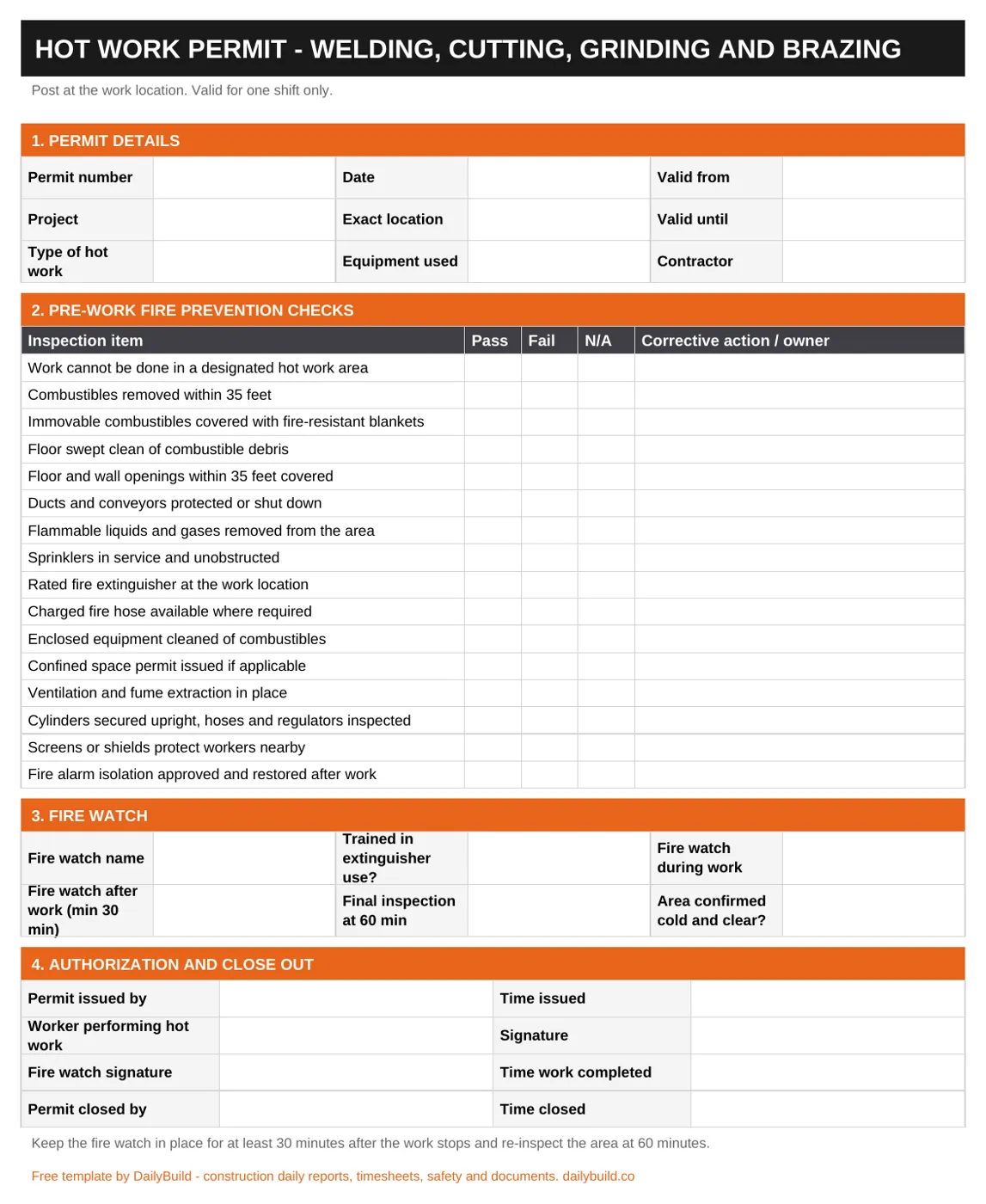
Move combustibles 35 feet, cover what cannot be moved, protect floor and wall openings, and keep a fire watch during the work and for at least 30 minutes after it stops, with a final inspection at 60 minutes. Most hot work fires are discovered after the crew leaves.