
Why ladder inspections matter
Ninety seconds against a fall from height.
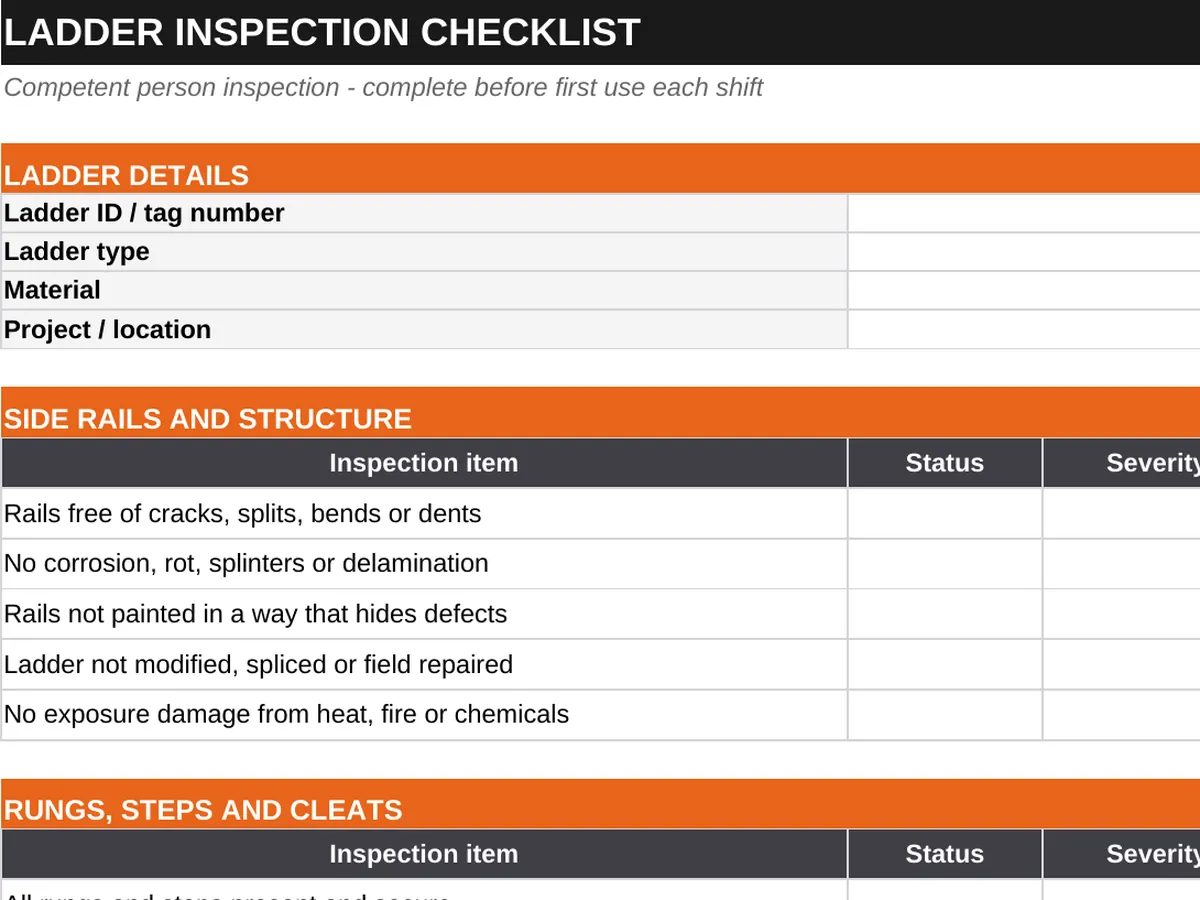
Ladders are the most familiar equipment on a jobsite, which is exactly why they get the least attention. A ladder inspection checklist forces a look at the parts that fail - the feet, the spreaders, the rung locks, and the rails - before somebody is standing on them.
Inspect before each use, log monthly
OSHA requires ladders to be inspected by a competent person for visible defects on a periodic basis and after any occurrence that could affect their safe use. Most contractors combine a quick pre-use check by the user with a documented monthly inspection recorded in the log.
Defective means gone, not later
A defective ladder is tagged and withdrawn from service immediately. Leaving it leaning against the wall with a tag on it guarantees somebody uses it. Get it off the site.
Check the duty rating too
Duty rating covers the worker plus tools and materials. A Type III household ladder has no place on a commercial jobsite, and an unreadable rating label is itself a reason to remove the ladder from service.
Set-up is half the risk
Even a perfect ladder fails when it is set at the wrong angle. Use the four-to-one rule for extension ladders, extend three feet above the landing, secure the top, and never stand on the top two steps of a step ladder.