
Why scaffold inspections matter
The tag is a promise to everyone who climbs on.
A scaffold inspection must be carried out by a competent person before each work shift and after any occurrence that could affect the structural integrity of the scaffold - a storm, an impact, a modification, or an overload. The tag hanging at the access point is how that inspection reaches the crew.
Start at the ground
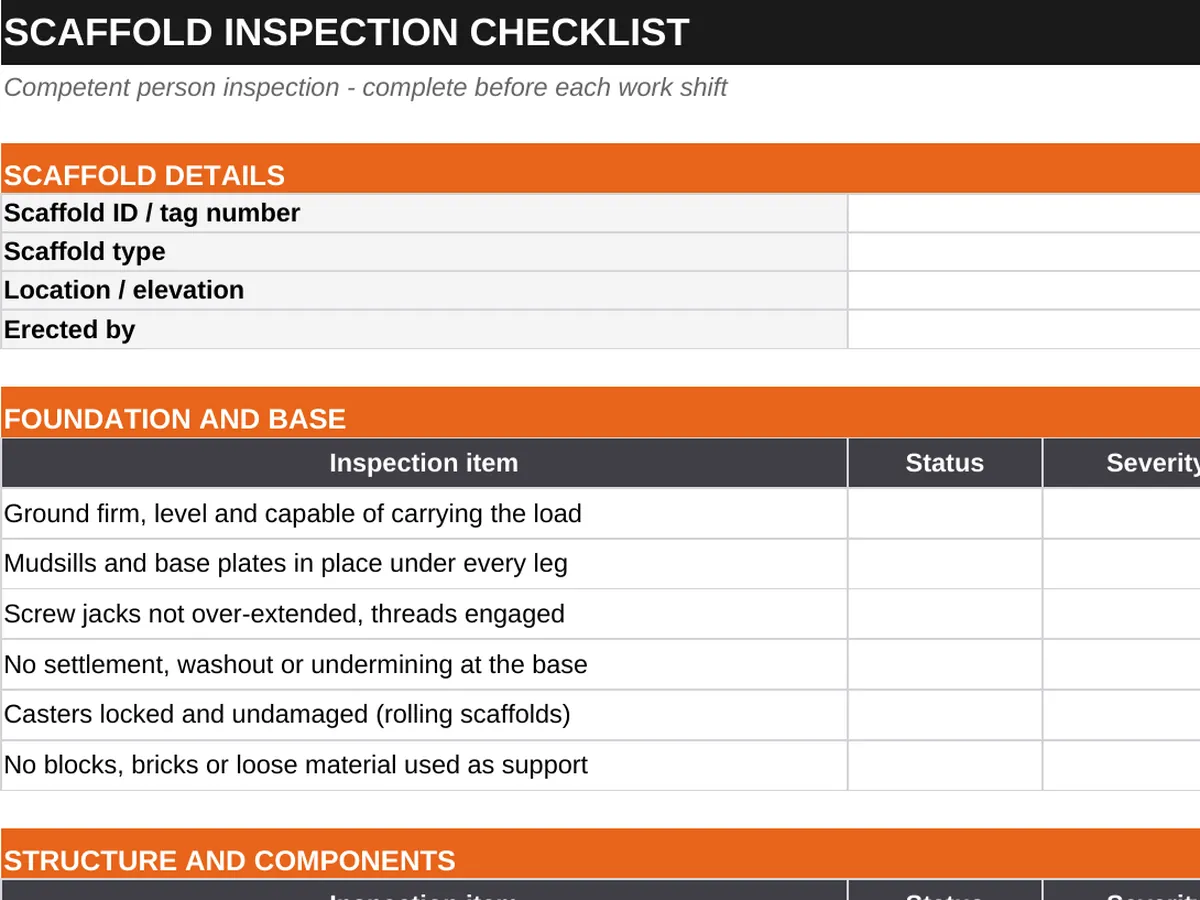
Most scaffold failures start below the first frame: soft ground after rain, missing mudsills, over-extended screw jacks, or blocks and bricks used as makeshift base support. Inspect the foundation before anything above it.
Planking and guardrails carry the crew
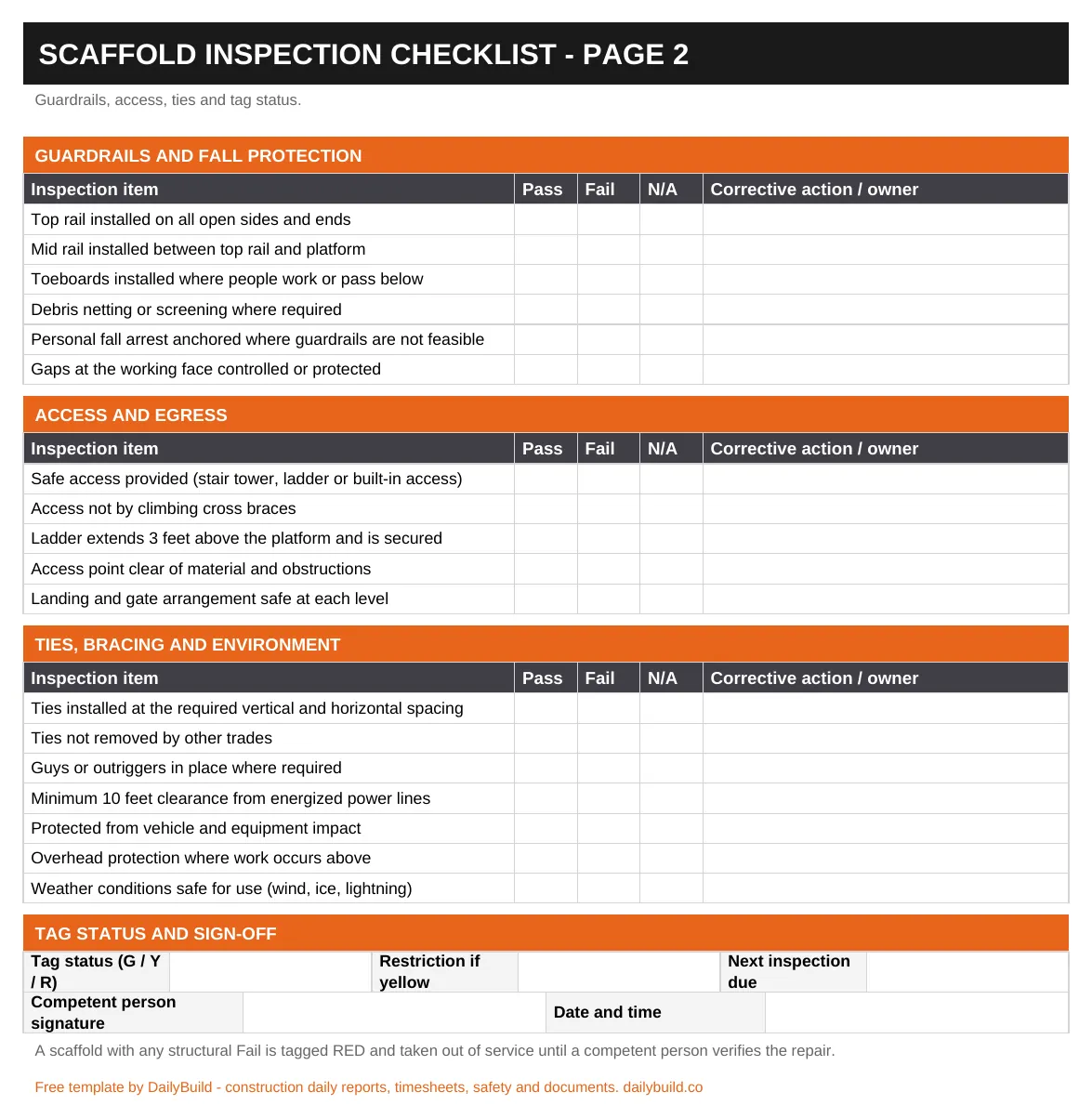
Platforms should be fully planked with no gaps over one inch, planks overlapped or cleated, and overhang controlled between six and twelve inches. Guardrails, mid rails, and toeboards go on every open side and end where people work or pass below.
Access is not the cross braces
Climbing cross braces is one of the most common scaffold violations on site. Provide a stair tower, an attached ladder, or built-in access, and keep landings clear of stored material.
Ties and power lines
Ties are installed at the required vertical and horizontal spacing and must not be removed by other trades. Maintain minimum clearance from energized power lines - ten feet is the common baseline for lines up to 300 volts to ground, with greater distances for higher voltages.